Frontier Peptide Labs

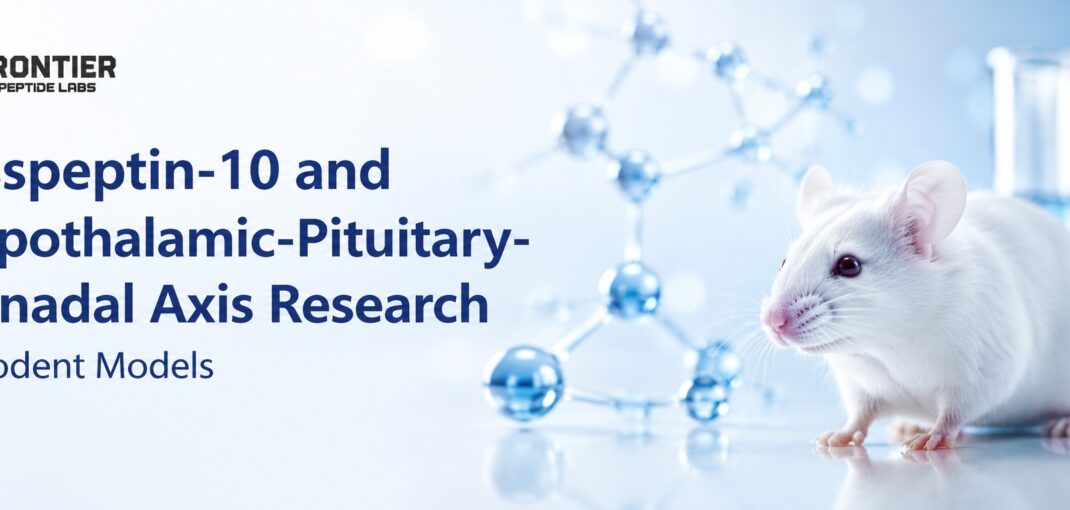
Kisspeptin-10: Hypothalamic-Pituitary-Gonadal Axis Research in Rodent Models

Kisspeptin-10 is the C-terminal decapeptide fragment of kisspeptin-54, the principal product of the KISS1 gene and the endogenous ligand of the G-protein-coupled receptor GPR54 (also known as KISS1R) [1]. The kisspeptin/KISS1R system was identified as a master regulator of reproductive neuroendocrinology following landmark genetic studies showing that loss-of-function GPR54 mutations produce hypogonadotropic hypogonadism in both […]

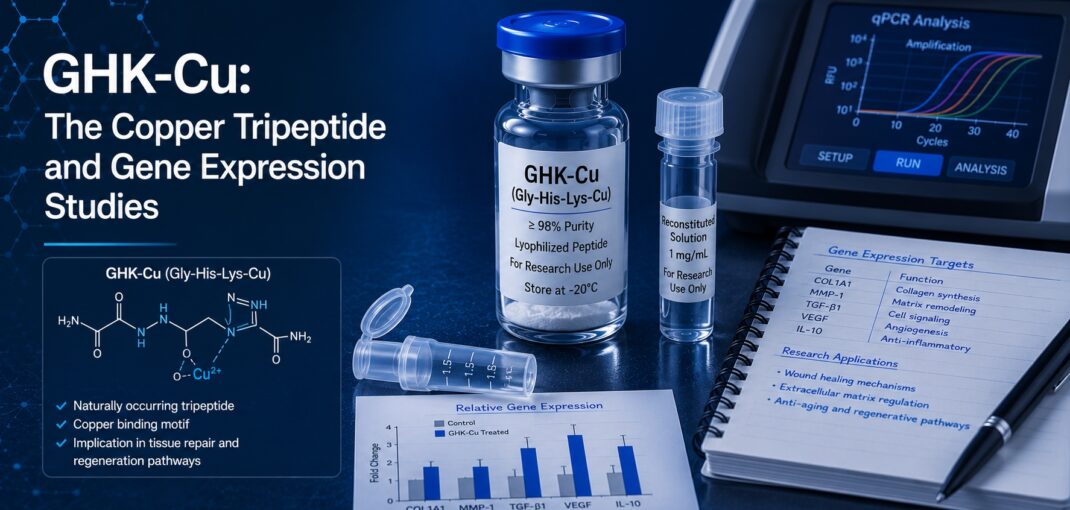
GHK-Cu: The Copper Tripeptide and Gene Expression Studies

GHK (glycyl-L-histidyl-L-lysine) is a tripeptide first isolated from human plasma by Pickart and colleagues in 1973 and shown to bind cupric ion (Cu²⁺) with high affinity to form the GHK-Cu complex [1]. Across cell-culture and animal-model research, GHK-Cu has become a frequently studied probe for genomic regulation, extracellular matrix remodeling, and oxidative-stress biology. The most […]

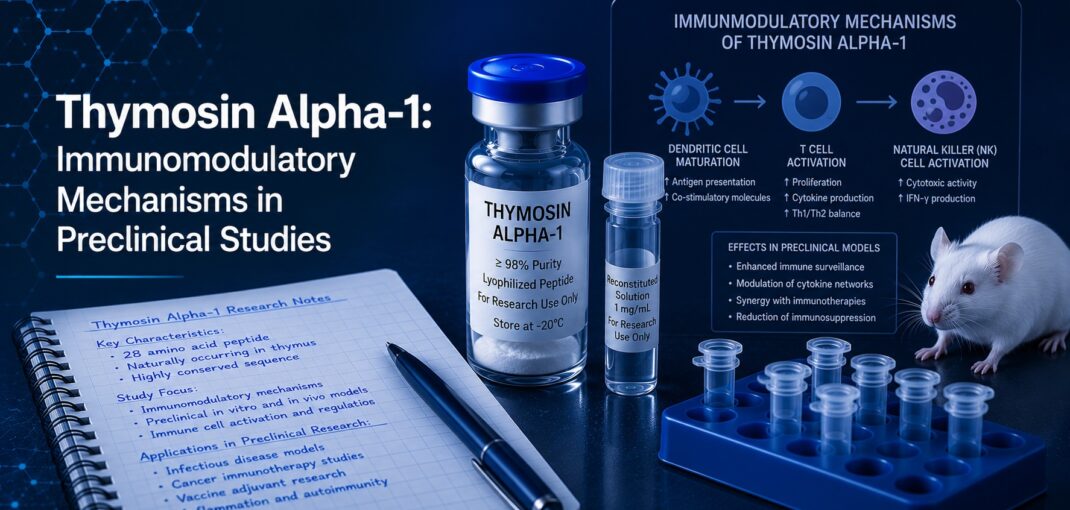
Thymosin Alpha-1: Immunomodulatory Mechanisms in Preclinical Studies

Thymosin Alpha-1 (Tα1) is a 28-amino-acid acetylated peptide originally isolated from bovine thymus tissue and produced in the synthetic form characterized by Goldstein and colleagues [1]. Across decades of preclinical investigation, Tα1 has been studied as a research probe for innate and adaptive immune signaling, with particular focus on Toll-like receptor (TLR) engagement and T-cell […]

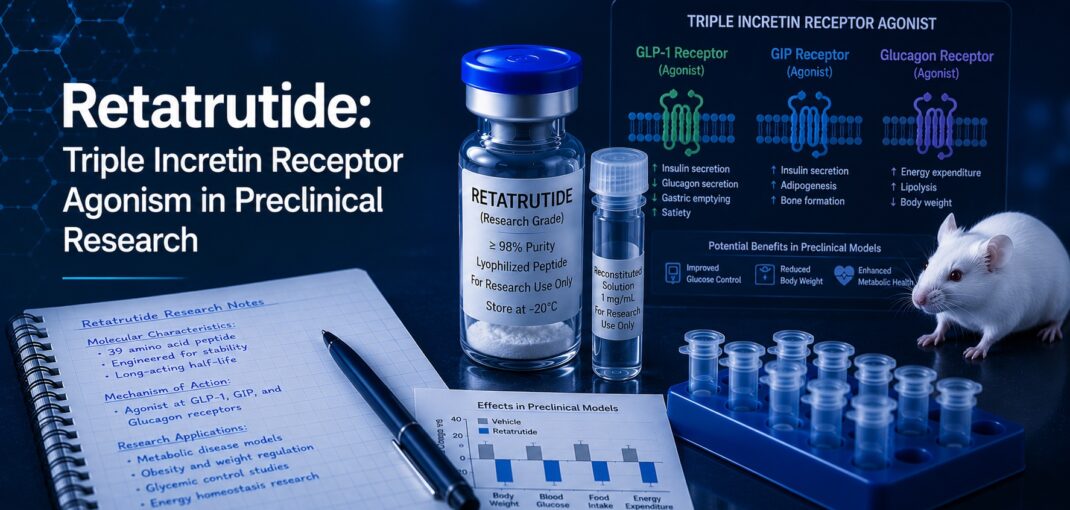
Retatrutide: Triple Incretin Receptor Agonism in Preclinical Research

Retatrutide (LY3437943) is a 39-amino-acid synthetic peptide engineered as a triple agonist at the glucose-dependent insulinotropic polypeptide receptor (GIPR), glucagon-like peptide-1 receptor (GLP-1R), and glucagon receptor (GCGR) [1]. Its design integrates a C20 fatty diacid moiety for albumin binding and a modified backbone that produces balanced — but tunable — agonism across all three receptors, […]

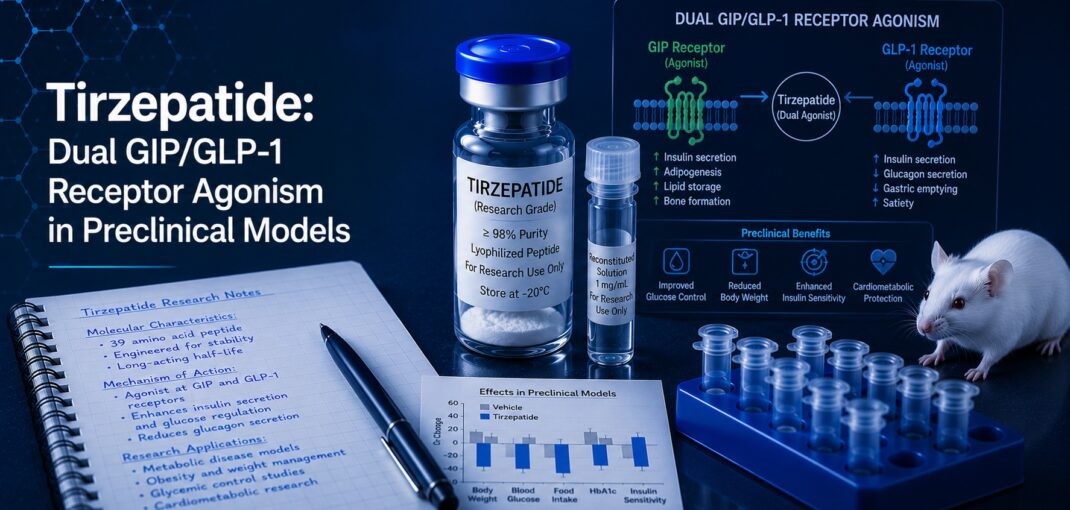
Tirzepatide: Dual GIP/GLP-1 Receptor Agonism in Preclinical Models

Tirzepatide (LY3298176) is a synthetic 39-amino-acid peptide engineered as a dual agonist of the glucose-dependent insulinotropic polypeptide receptor (GIPR) and the glucagon-like peptide-1 receptor (GLP-1R), with a C20 fatty diacid moiety for albumin binding [1]. It is structurally derived from the native GIP backbone with modifications biasing receptor signaling toward cAMP accumulation without recruiting β-arrestin […]

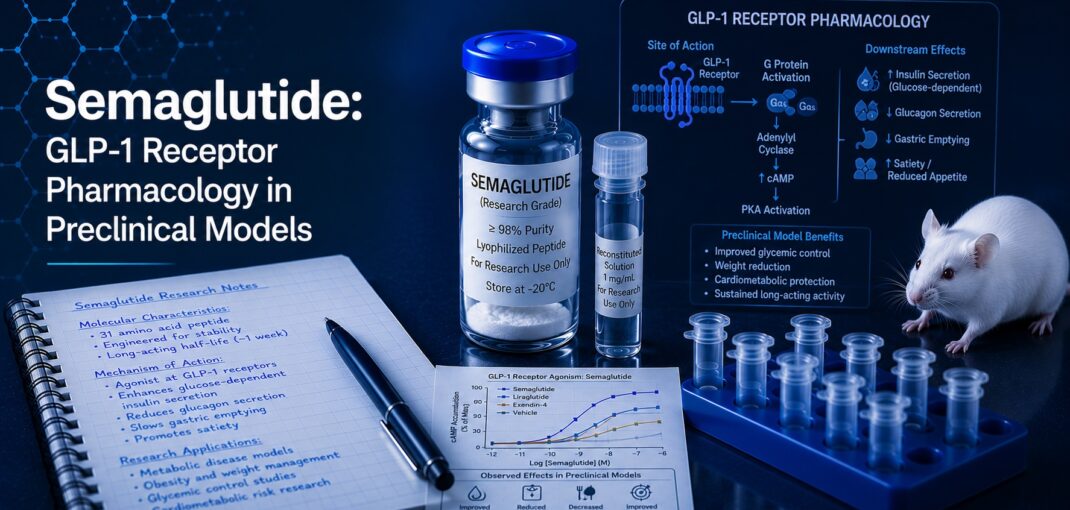
Semaglutide: GLP-1 Receptor Pharmacology in Preclinical Models

Semaglutide is a long-acting acylated analog of glucagon-like peptide-1 (GLP-1) developed as a research tool and pharmaceutical probe for the GLP-1 receptor (GLP-1R) [1]. Its structural modifications — substitution of alanine at position 8 with α-aminoisobutyric acid (Aib) and attachment of a C18 fatty diacid linker — confer resistance to dipeptidyl peptidase-4 cleavage and enable […]

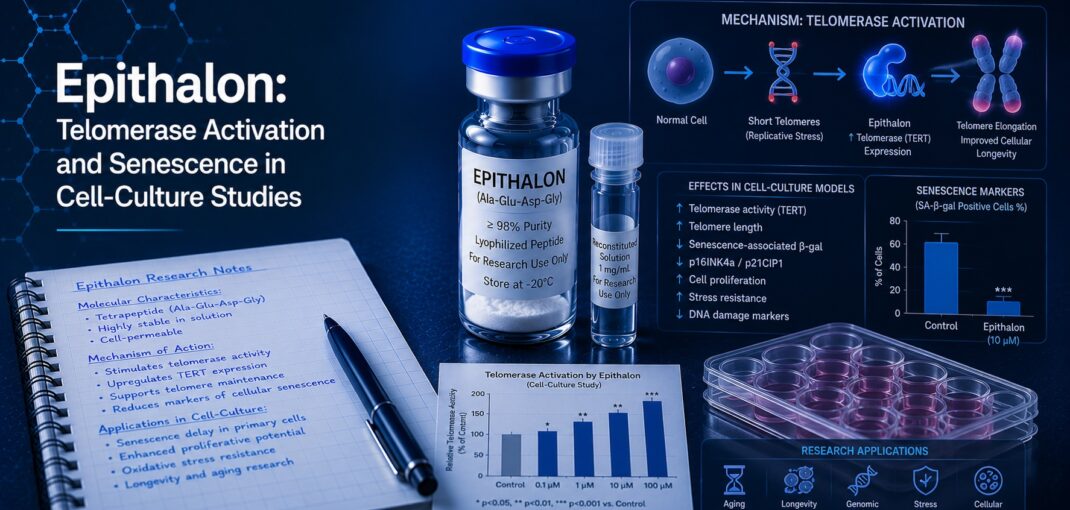
Epithalon: Telomerase Activation and Senescence in Cell-Culture Studies

Epithalon (Epitalon) is a synthetic tetrapeptide (Ala-Glu-Asp-Gly) modeled on a fragment of epithalamin, a pineal-gland polypeptide extract originally characterized in the work of Khavinson and colleagues at the St. Petersburg Institute of Bioregulation and Gerontology [1]. Across multiple in vitro and in vivo systems, Epithalon has been used as a research probe for telomere biology, chromatin […]

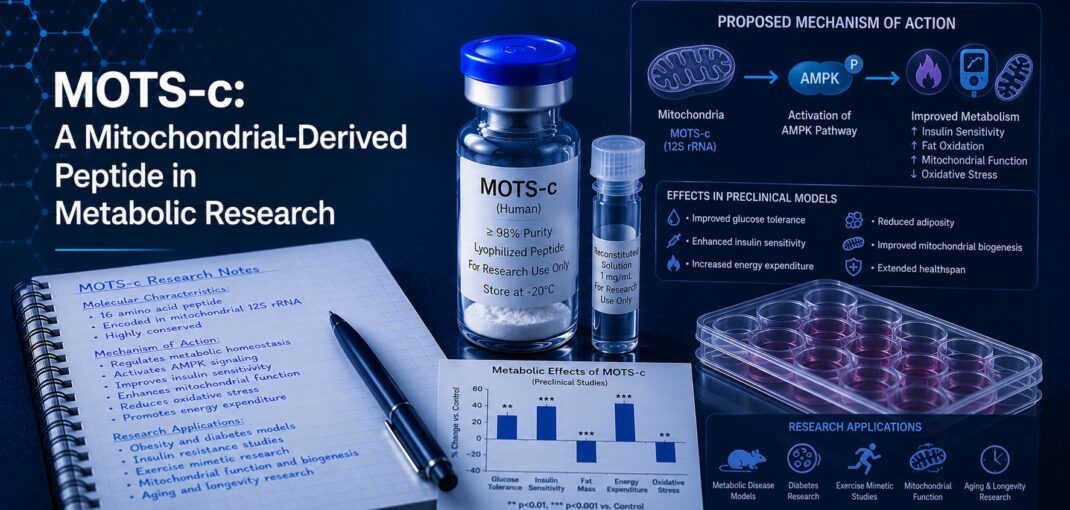
MOTS-c: A Mitochondrial-Derived Peptide in Metabolic ResearchMOTS-c: A Mitochondrial-Derived Peptide in Metabolic Research

MOTS-c (Mitochondrial Open Reading frame of the Twelve S rRNA-c) is a 16-amino-acid peptide encoded within the mitochondrial 12S rRNA region — one of the first formally characterized mitochondrial-derived peptides (MDPs) [1]. Since its initial description by Lee and colleagues in 2015, MOTS-c has emerged as an important research probe for studying retrograde mitochondrial-to-nuclear communication […]

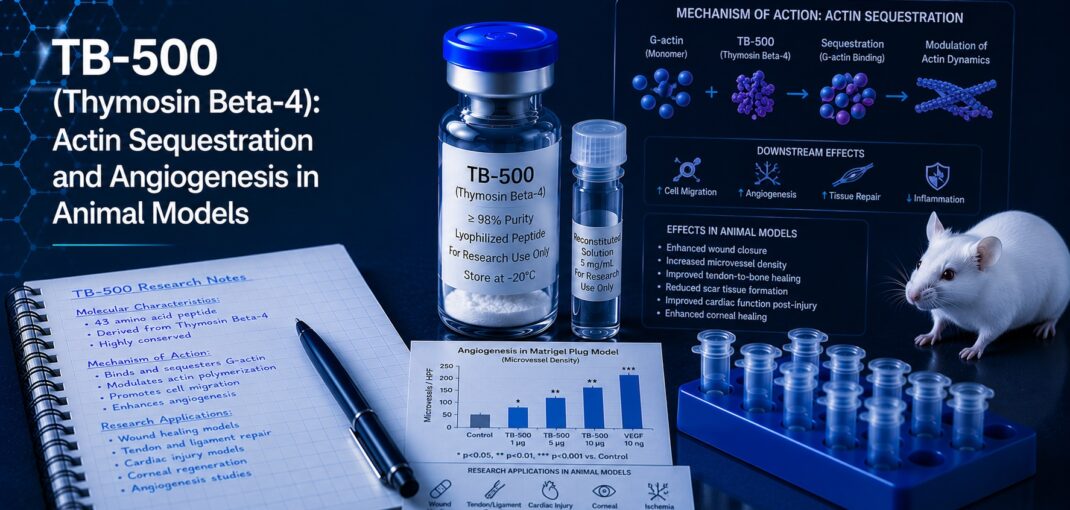
TB-500 (Thymosin Beta-4): Actin Sequestration and Angiogenesis in Animal Models

Thymosin Beta-4 (TB-4) is a 43-amino-acid G-actin-sequestering peptide first isolated from calf thymus [1]. The synthetic research analog commonly referred to as TB-500 corresponds to the full-length sequence and has become a frequently studied probe for mechanisms of cytoskeletal dynamics and tissue regeneration in preclinical systems. The defining biochemical property of TB-4 is its high-affinity […]

BPC-157: Cytoprotection and Tissue Repair in Preclinical Models

Body Protection Compound-157 (BPC-157) is a synthetic pentadecapeptide derived from a partial sequence of a gastric protein originally isolated from rodent gastric juice [1]. Across two decades of preclinical investigation, the molecule has become a workhorse research tool for studying cytoprotection, angiogenesis, and connective-tissue repair in cell-culture and animal models. Mechanistically, the most consistent findings […]

Select the fields to be shown. Others will be hidden. Drag and drop to rearrange the order.
  • Image
  • SKU
  • Rating
  • Price
  • Stock
  • Availability
  • Add to cart
  • Description
  • Content
  • Weight
  • Dimensions
  • Additional information
Click outside to hide the comparison bar
Compare