

Peptide Vials vs. Capsules vs. Sprays: Format Guide
Frontier Peptide Labs supplies research peptides in three formats — lyophilized vials, capsules, and liquid sprays. The compound is the...
Read More >>
BPC-157 vs. TB-500: Research Peptide Comparison
BPC-157 and TB-500 are two of the most frequently co-studied peptides in tissue-repair research, and Frontier Peptide Labs sells both...
Read More >>
Peptide Reconstitution Calculator
Peptide reconstitution calculator Use this calculator to work out the draw volume for a lyophilized research peptide once it has...
Read More >>
A-Z Research Peptide Glossary
Frontier Peptide Labs Research Library A-Z Research Peptide Glossary: Key Terms for Laboratory Research This A-Z glossary explains common...
Read More >>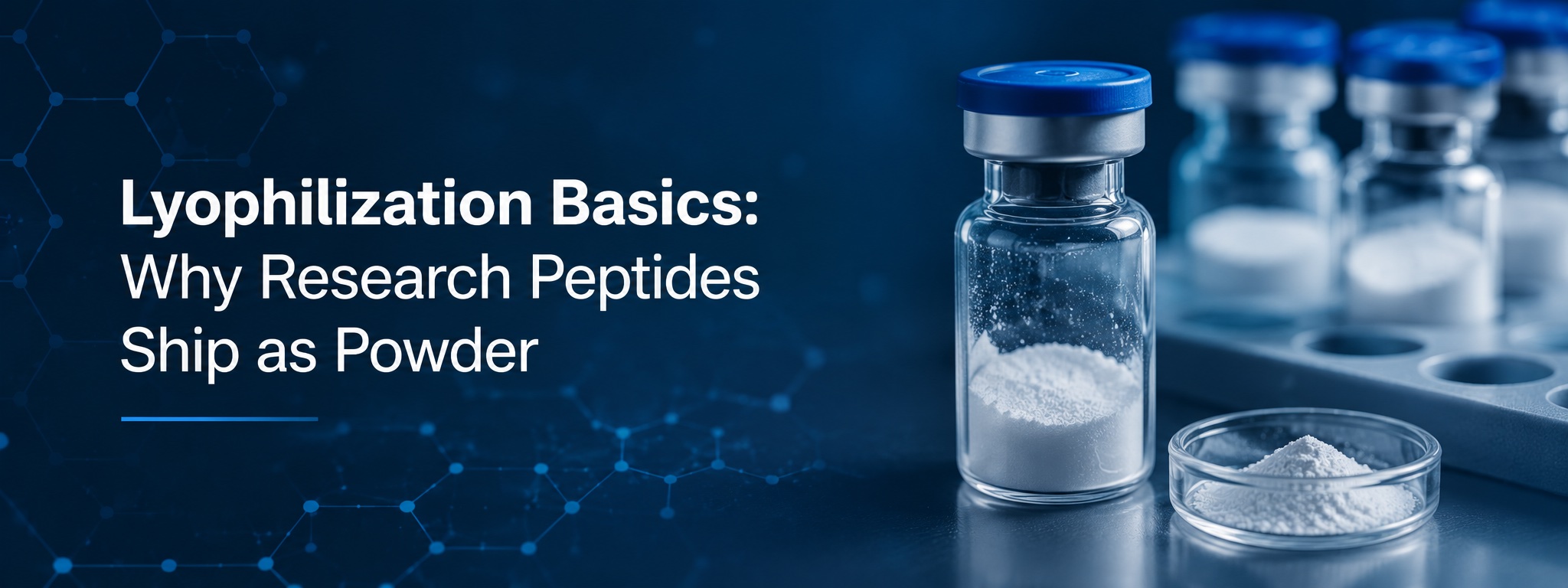
Lyophilization Basics: Why Research Peptides Ship as Powder
Most research-grade peptides ship as a lyophilized (freeze-dried) solid rather than a ready-to-use aqueous solution. Understanding why lyophilization is the...
Read More >>
Reading a Certificate of Analysis (COA) for Research Peptides
A Certificate of Analysis (COA) is the document that connects a bench-grade research peptide to the analytical data establishing its...
Read More >>
Solvent Selection for Hydrophobic Research Compounds
Not every research compound dissolves cleanly in water. Hydrophobic small molecules and peptides — including Tesofensine, Dihexa, Tesofensine analogs, and...
Read More >>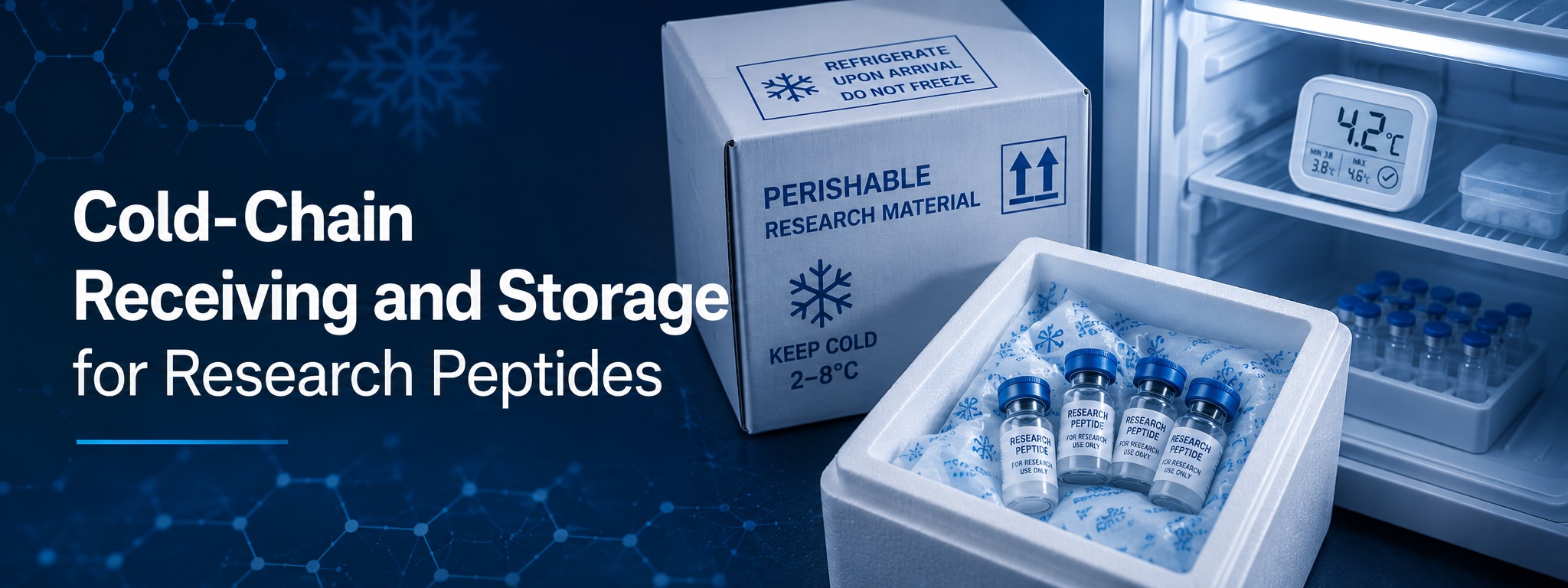
Cold-Chain Receiving and Storage for Research Peptides
Most lyophilized research peptides survive ambient shipping for short transit windows, but receiving practices and downstream storage materially affect long-term...
Read More >>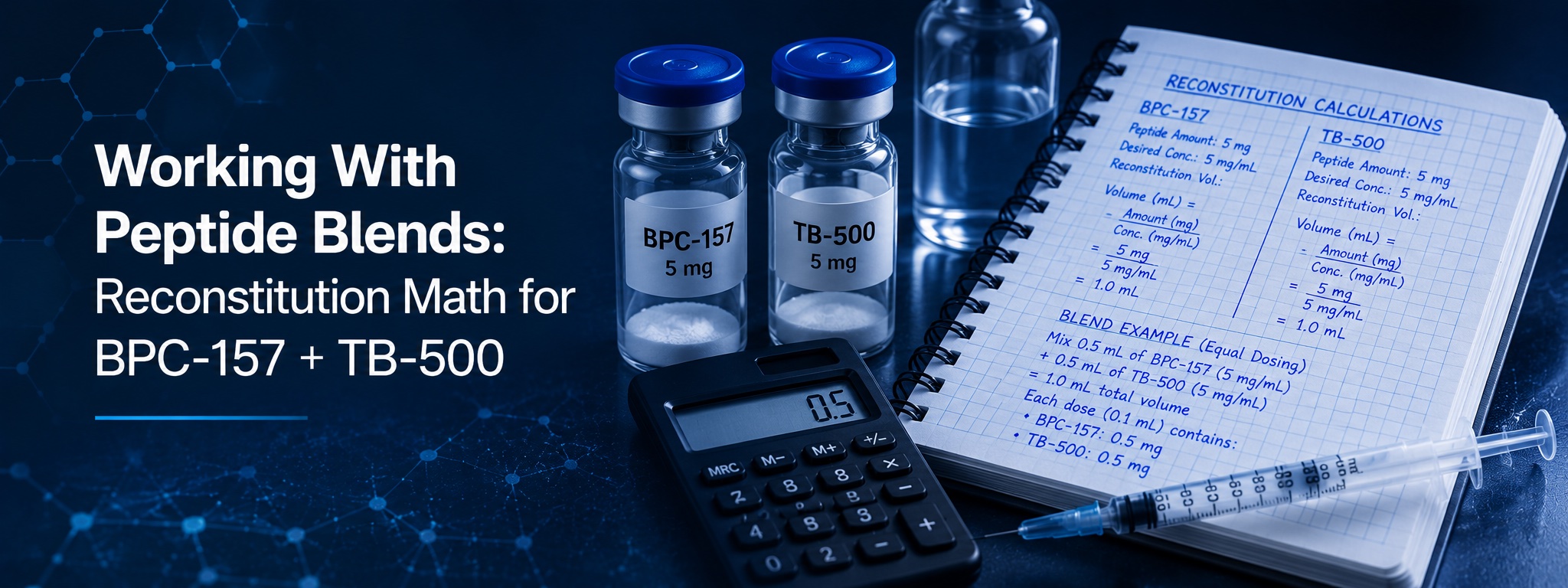
Working With Peptide Blends: Reconstitution Math for BPC-157 + TB-500
Combination peptide vials — formulated with two or more peptides co-lyophilized in a single container — are increasingly common in...
Read More >>
Microgram-Scale Pipetting Accuracy in Peptide Research
Many research peptides are dosed at microgram or sub-microgram quantities in cell-culture and animal-model experiments. At these volumes, pipetting error...
Read More >>
NAD+ Laboratory Handling: Protecting Against Oxidation and Light Exposure
Nicotinamide adenine dinucleotide (NAD+) is a pyridine nucleotide and essential cellular redox cofactor whose oxidation state, hydrolytic susceptibility, and photosensitivity...
Read More >>
Bacteriostatic Water vs Sterile Water in Research Peptide Reconstitution
Two aqueous diluents dominate laboratory peptide reconstitution work: sterile water for injection (SWFI) and bacteriostatic water for injection (BWFI). Selection...
Read More >>
Storage and Stability of GLP-1 Peptides in the Laboratory
GLP-1 receptor agonists used in research — including Semaglutide and related analogs — are acylated peptides whose long-acting pharmacology depends...
Read More >>
Reconstituting Lyophilized BPC-157: A Laboratory Handling Guide
Lyophilized peptides arrive as a freeze-dried solid — typically a thin film or powder under vacuum in a sealed vial....
Read More >>